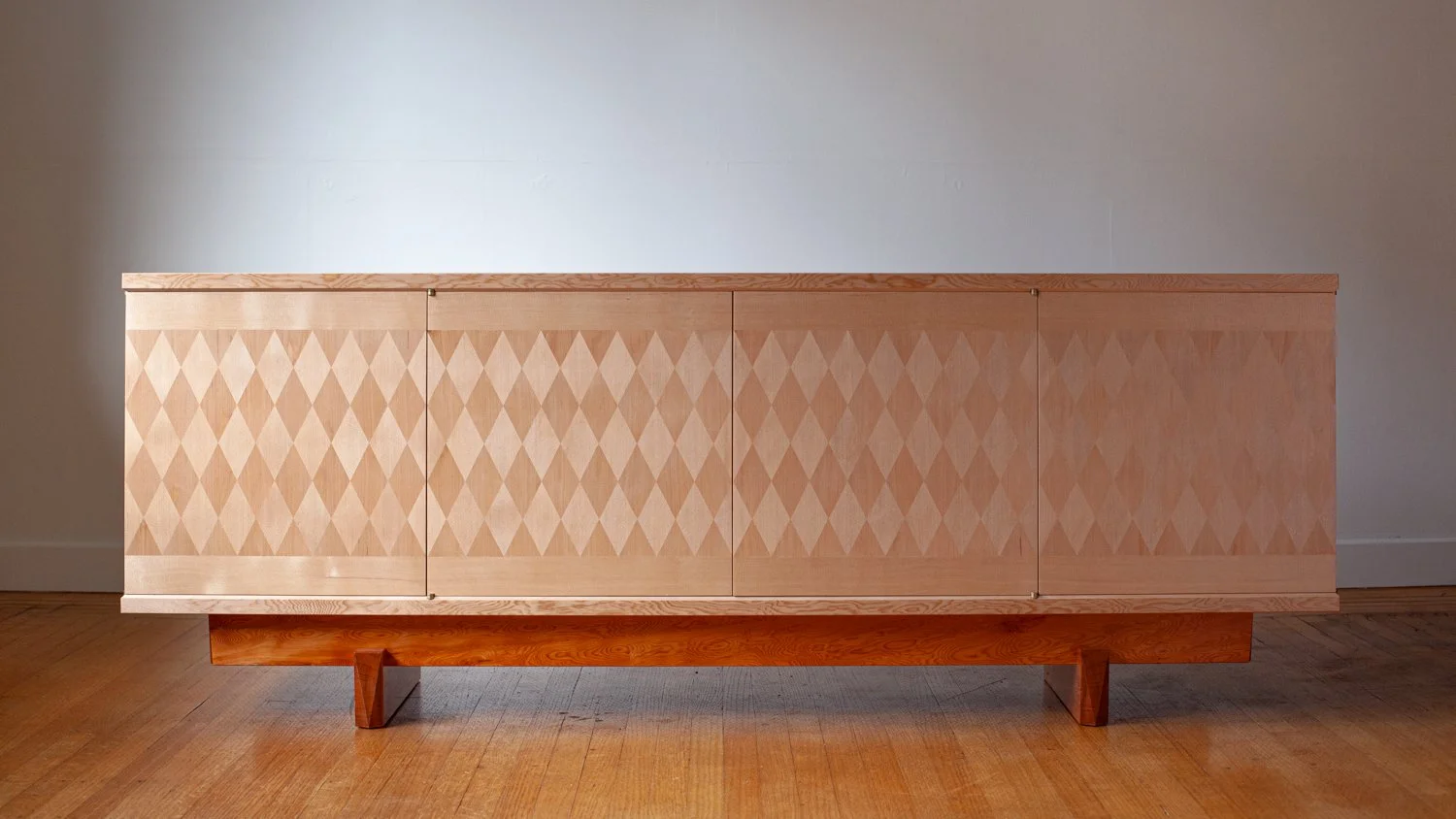
The Jester
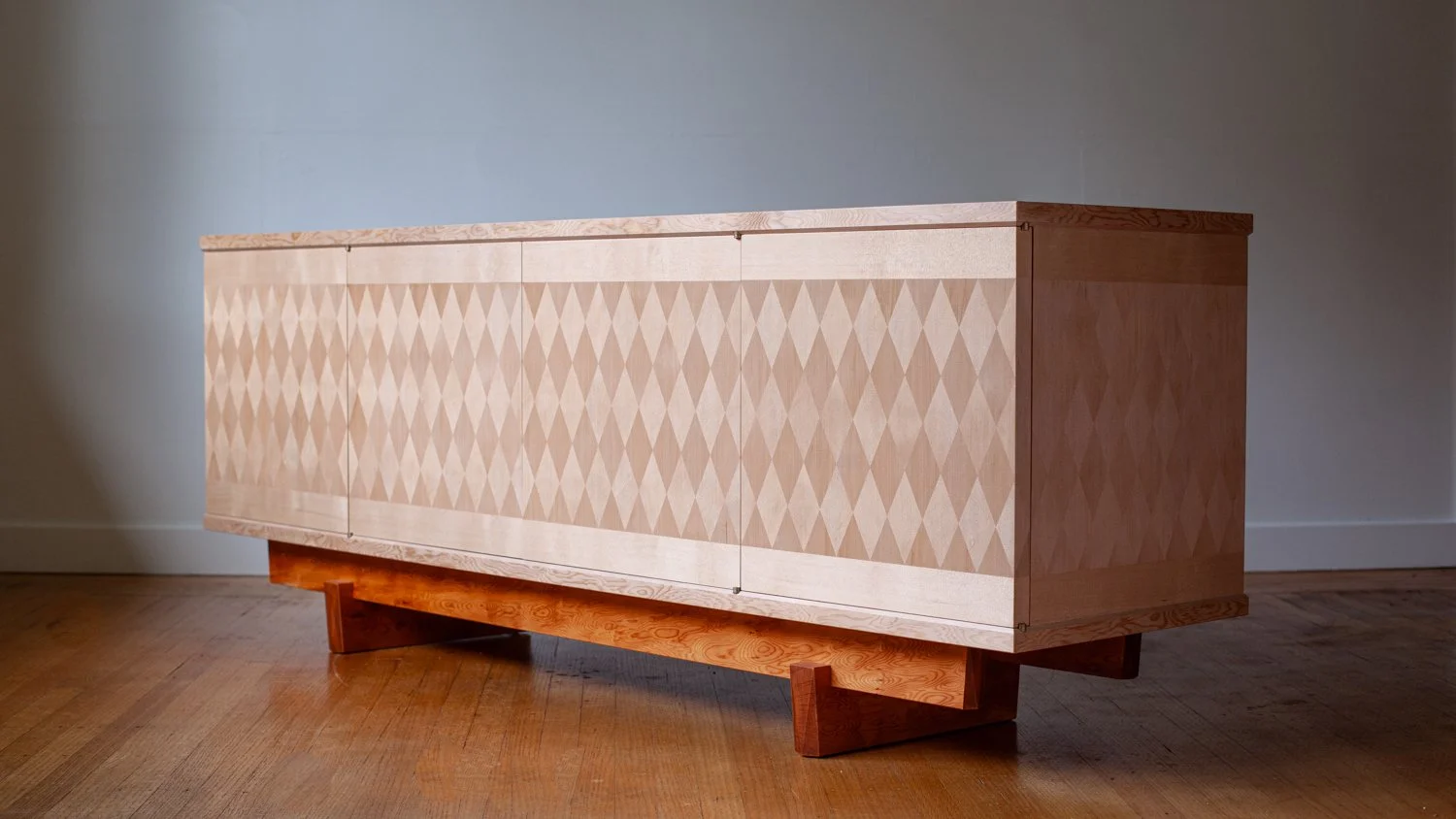
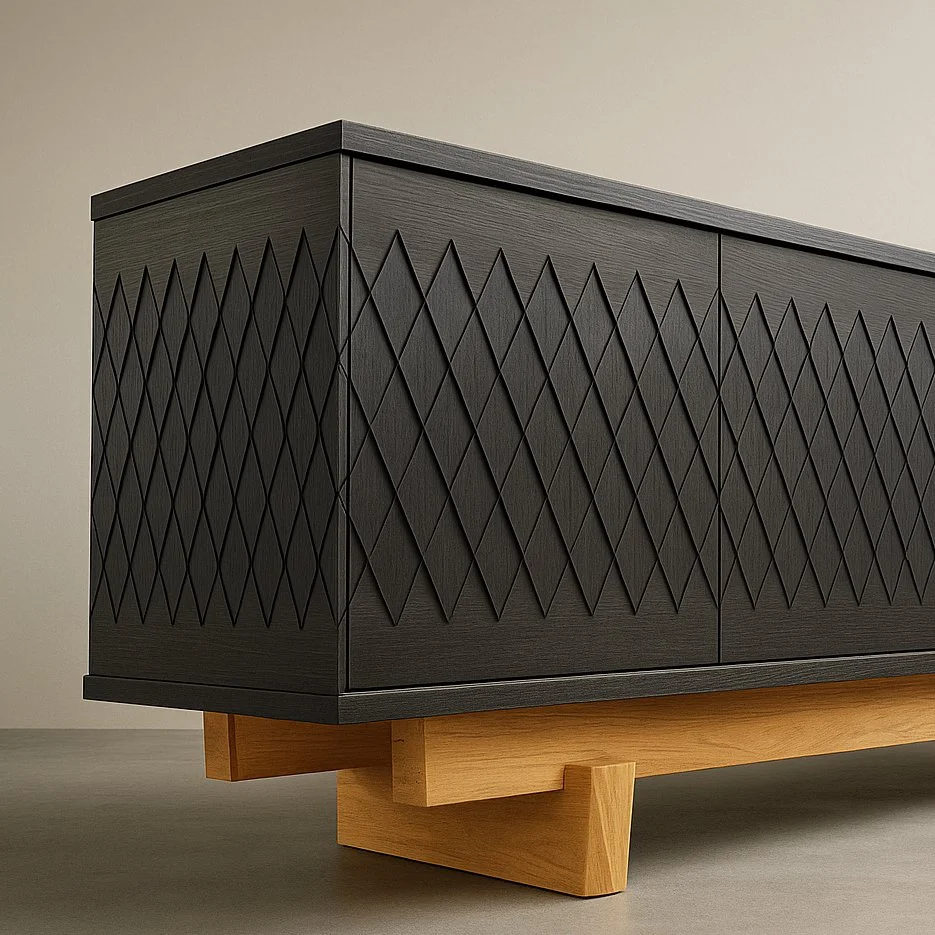
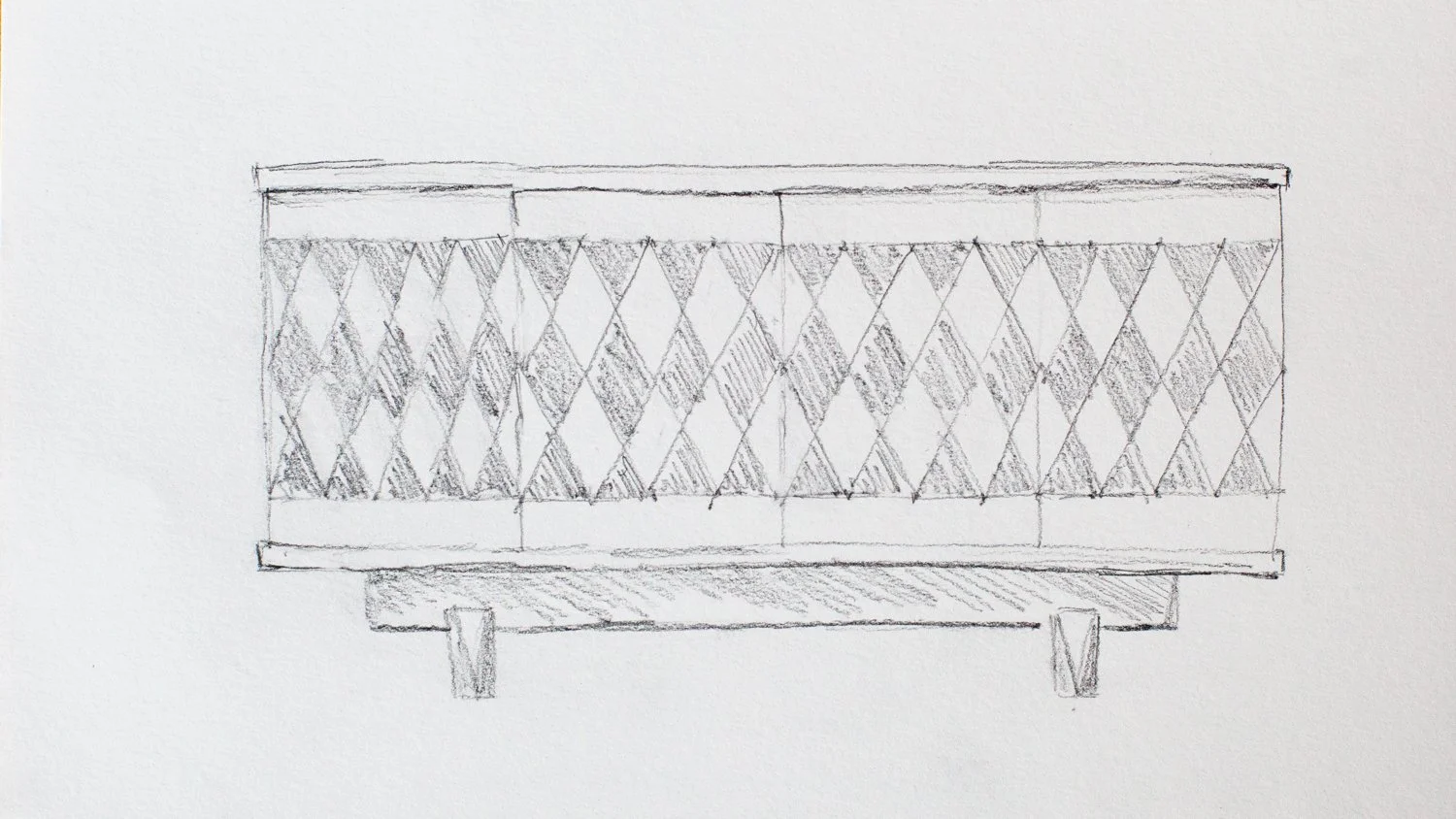
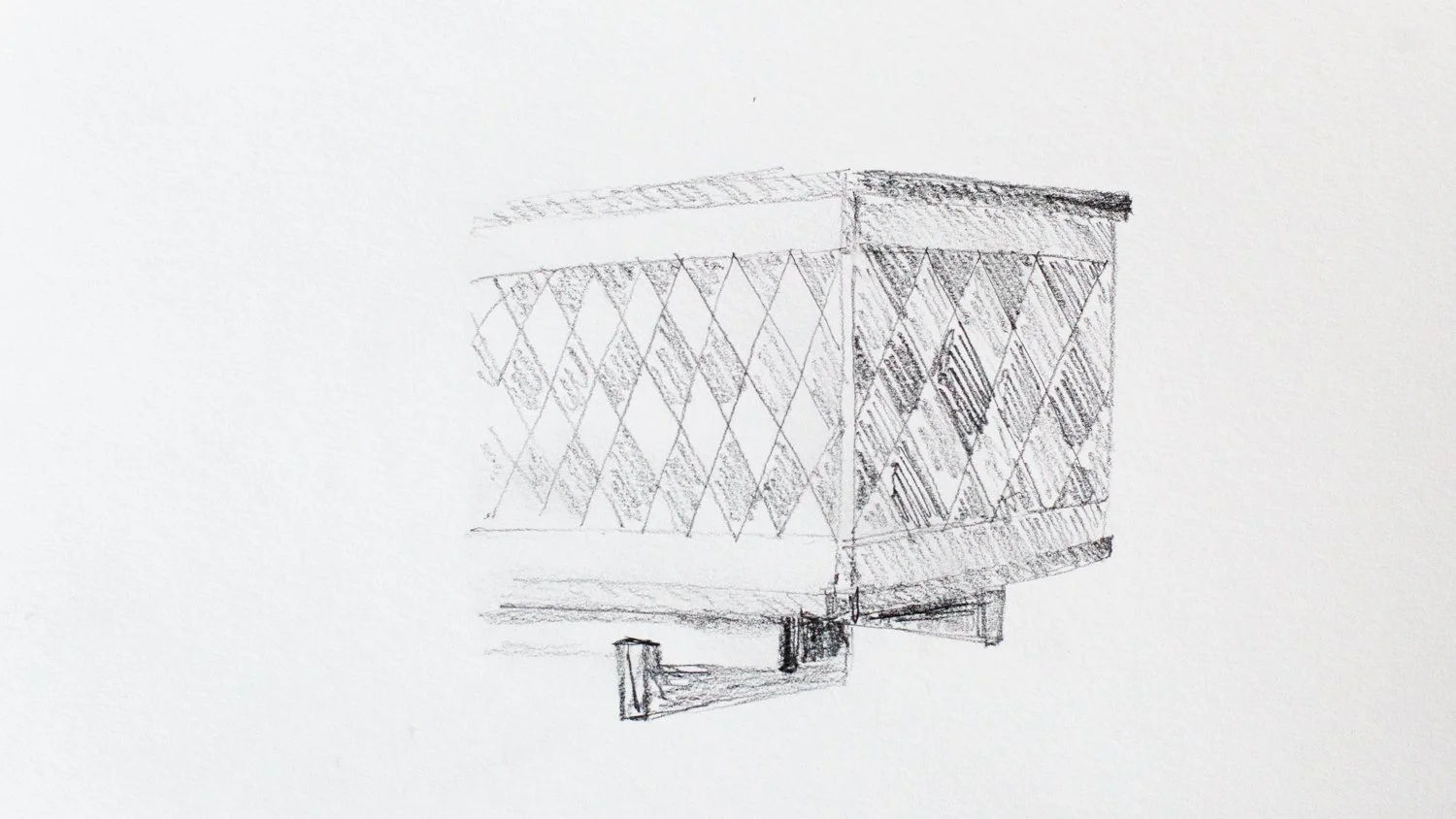
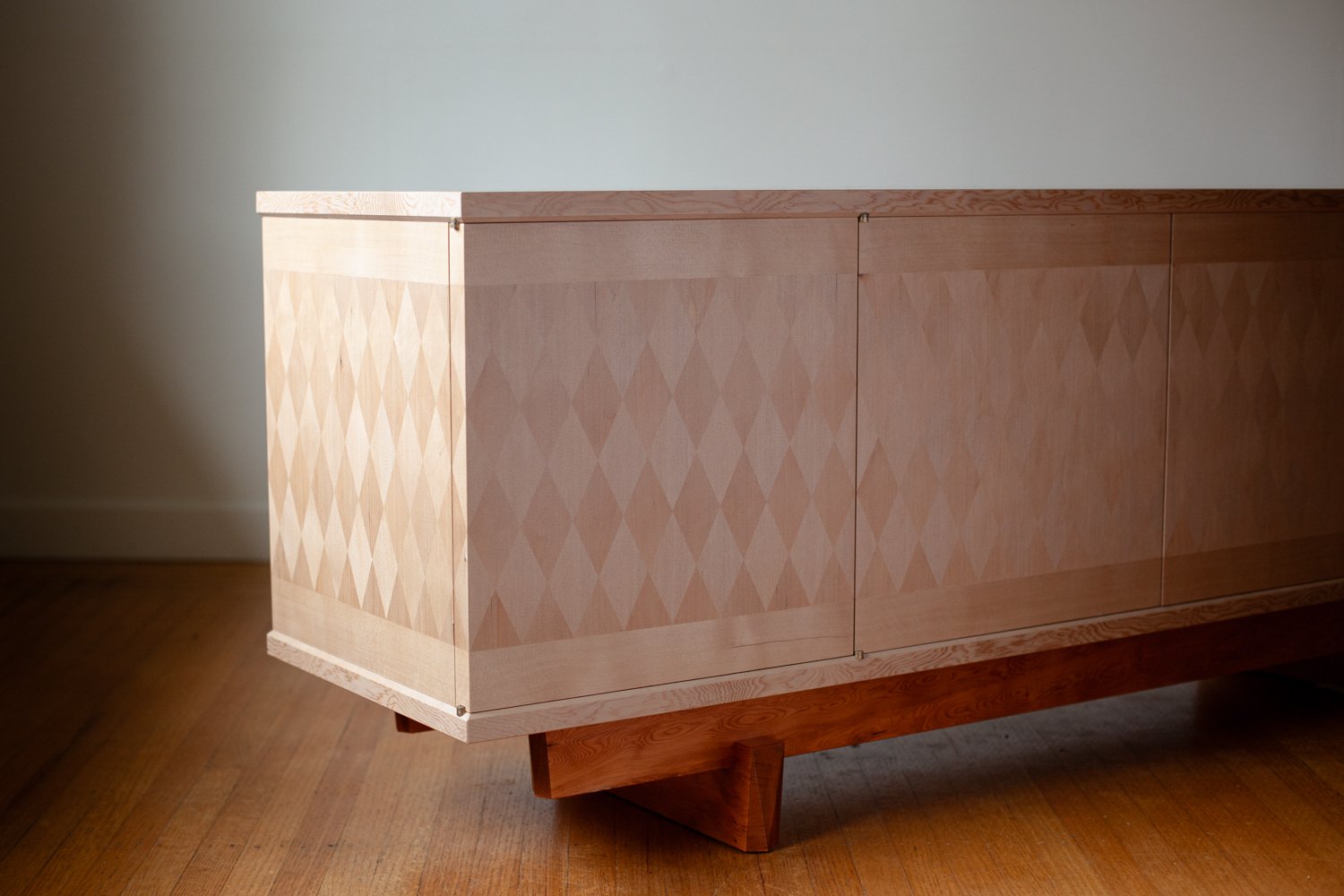
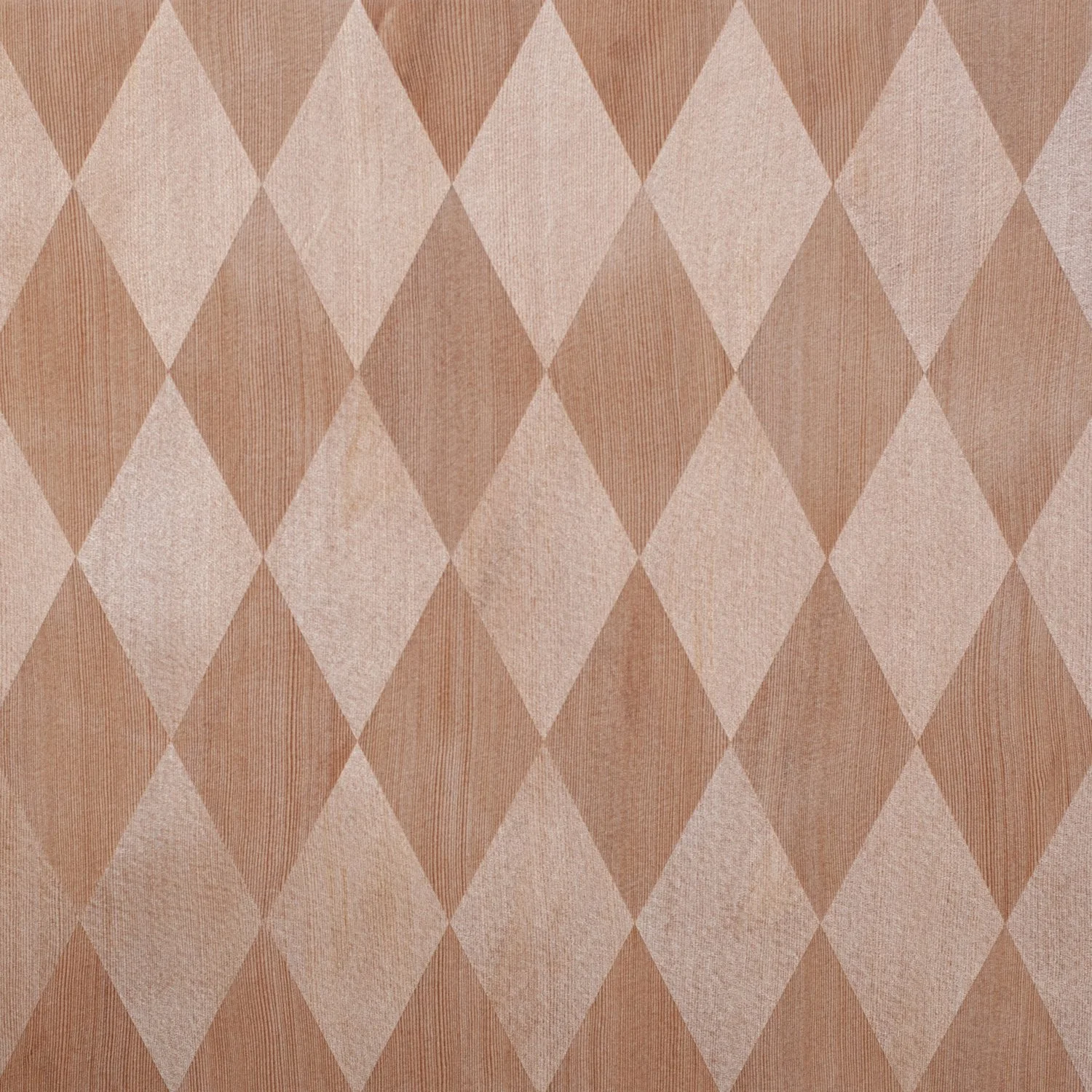
A low credenza ornamented with a prismatic parquet of western hemlock,
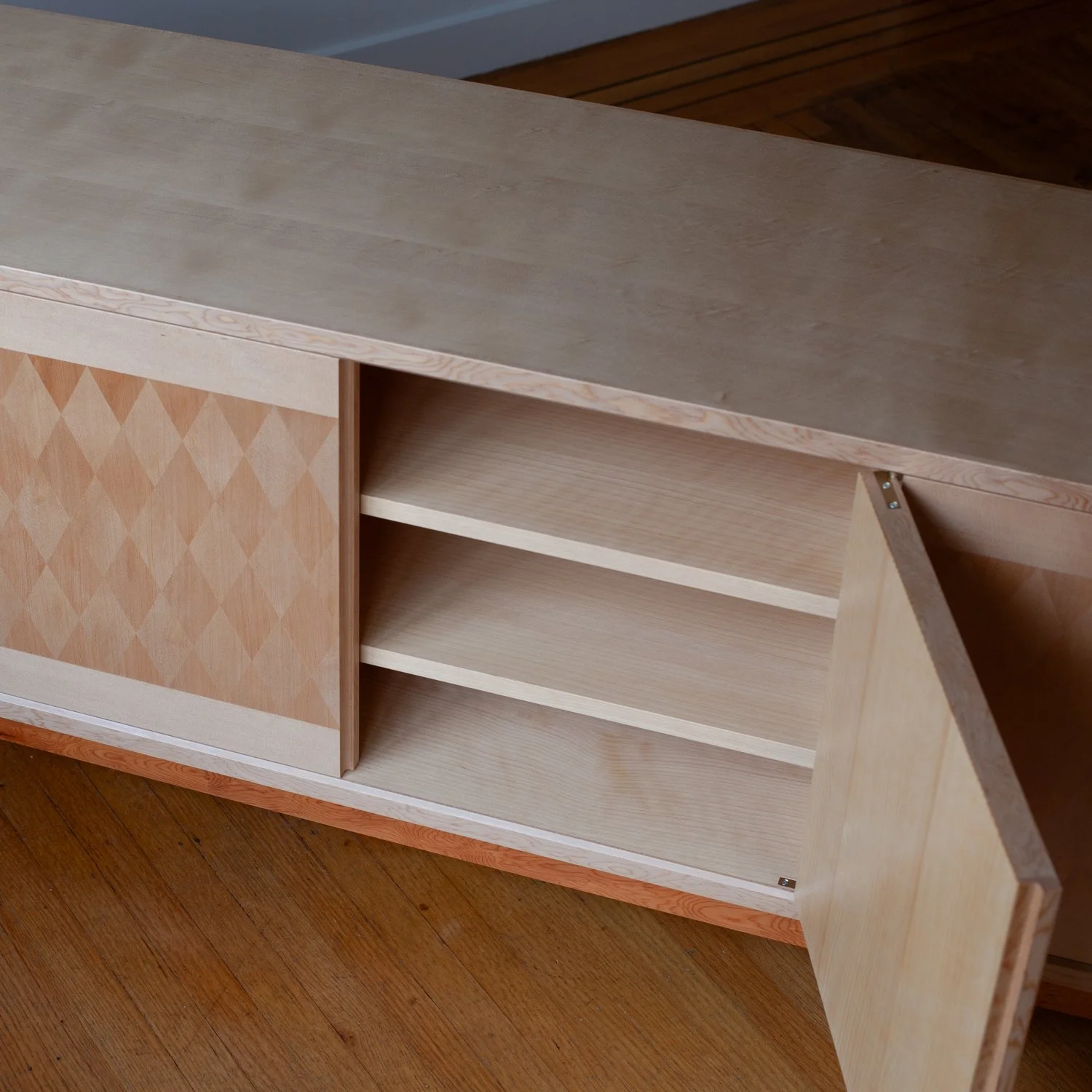
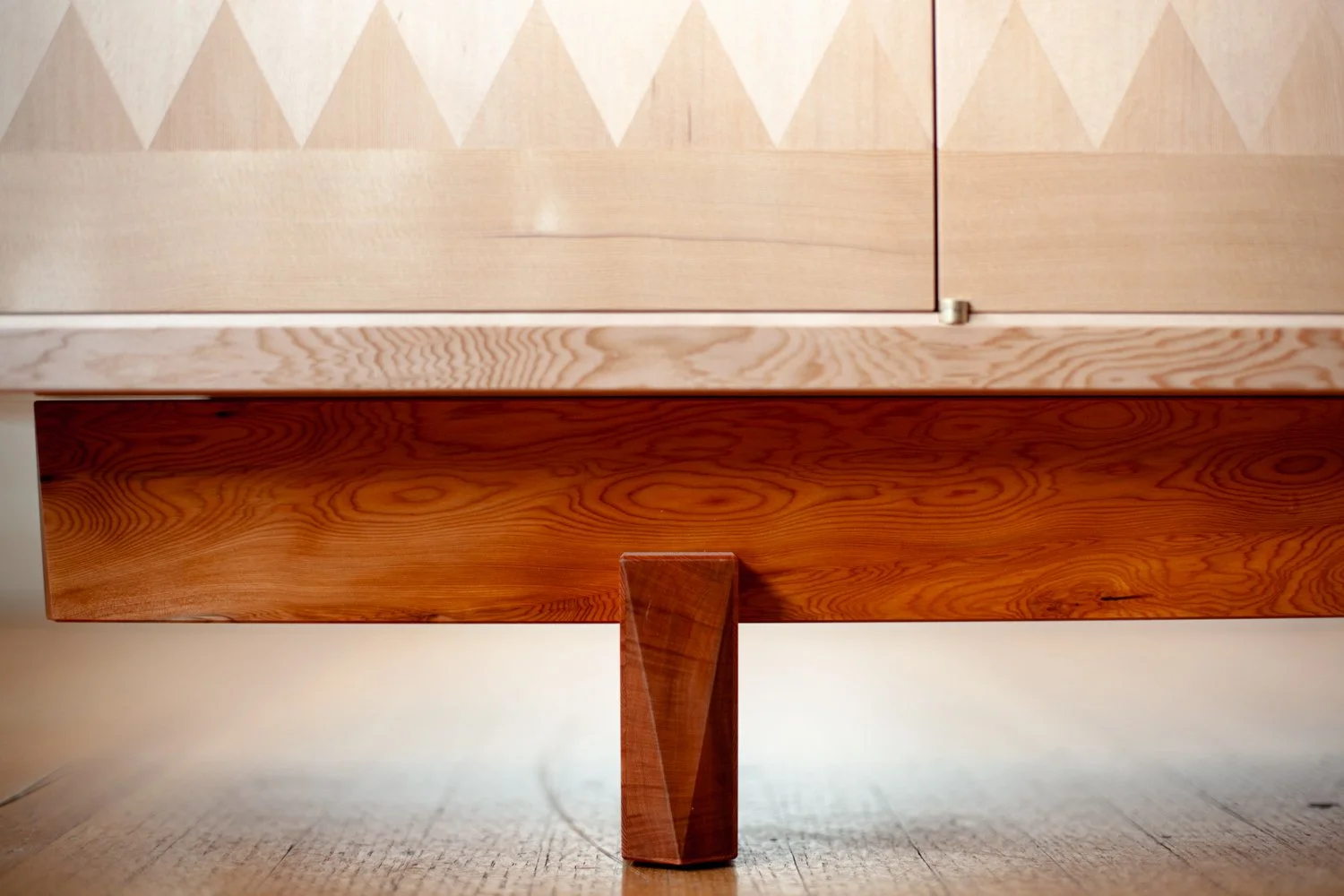
its aromatic interior of Port Orford cypress, upon a stand of Pacific yew
64” x 24” x 16”
Design
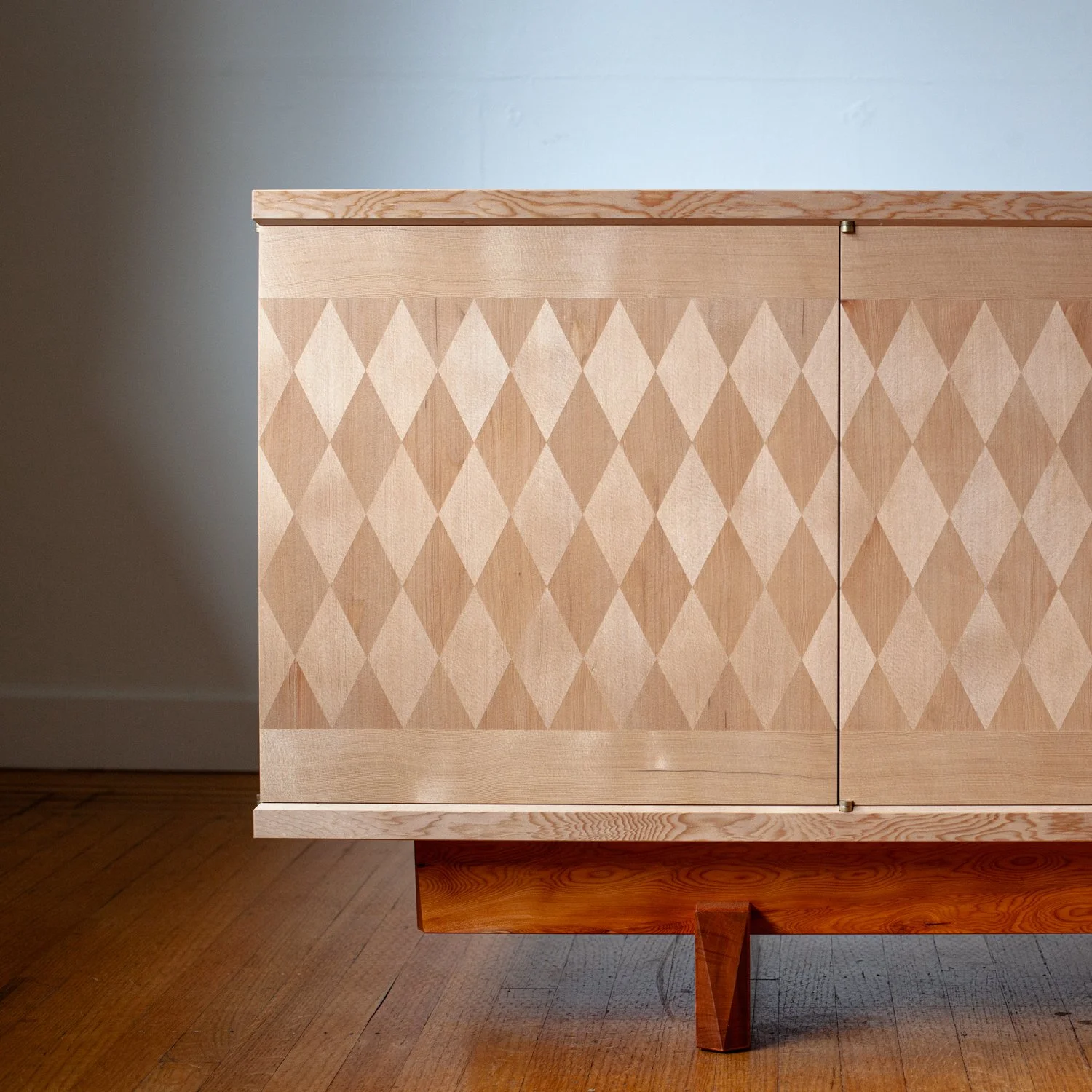
This work emerges from a joinery practice oriented toward materials. It continues a line of inquiry established in earlier work: that regional softwoods, when selected and worked with care, can support a level of refinement typically associated with imported, exotic, higher-status woods.
The impetus is a prismatic parquet motif, which illuminates qualities of hemlock that are otherwise overlooked. The pattern arises from the interplay of light and grain, carefully oriented across the panel. Its fore-fronting in this design is informed by a long-standing interest in how careful attention to grain opens dimensions of making beyond length, width, and height. More than applied decoration, the intent is to reveal wood, worked attentively, as a medium of light, resonance, tactility, and aroma.
Composition
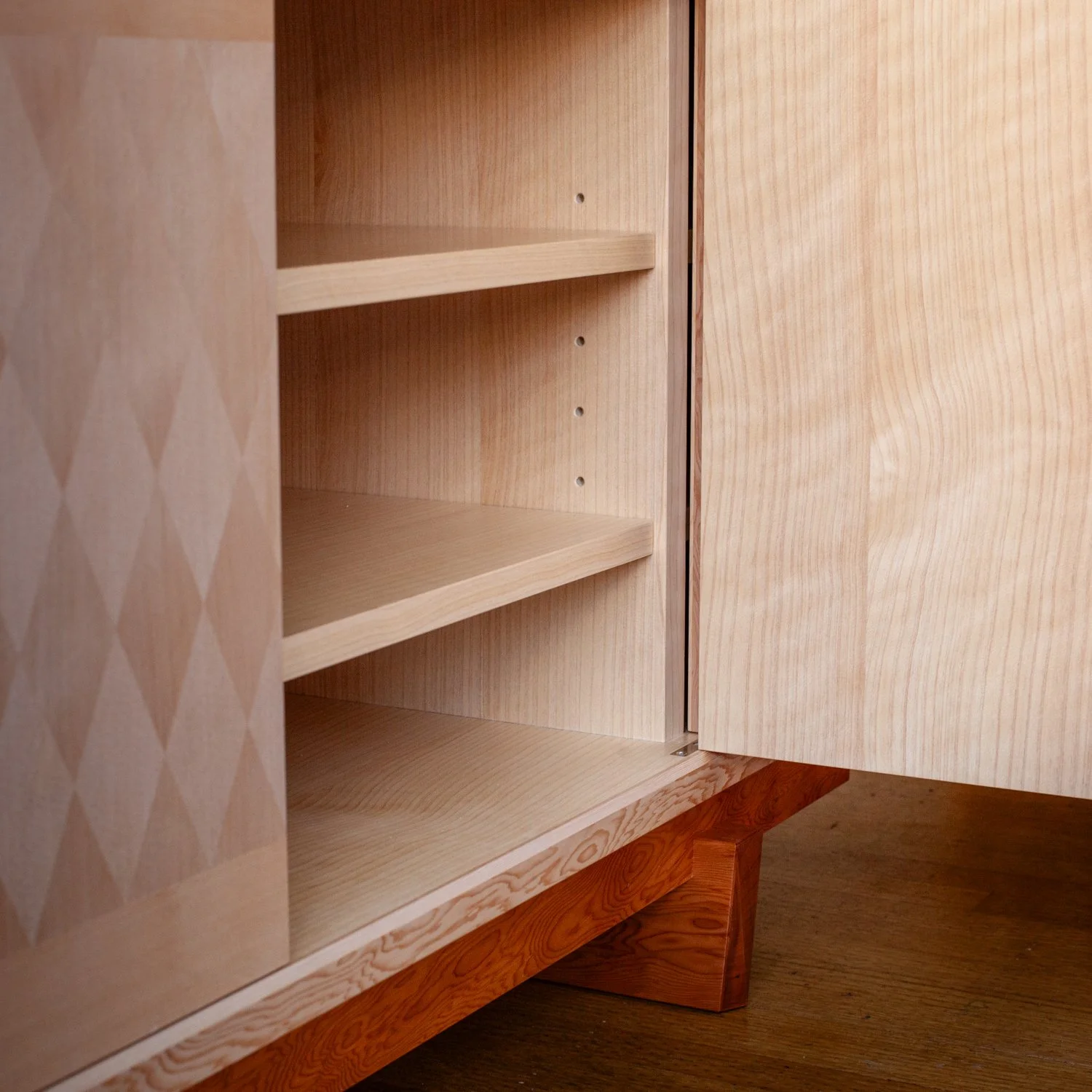
Constructed from thick shop-sawn veneer, the surfaces retain depth and workability while enabling composition and repetition across the plane. These surfaces are finished in hand-applied shellac, allowing for repair and renewal over time while inviting light to charge the material’s prismatic character.
Joinery and internal structures follow conventional cabinetmaking principles, with an emphasis on soundness, serviceability, and clarity of form.
Externally, the prototype features western hemlock selected from high-grade local stock; Port Orford cypress – imparting its distinctive aromatic presence to the interior – was recovered from urban tree removal; and Pacific yew salvaged from logged slash is used in the stand.
Tailoring
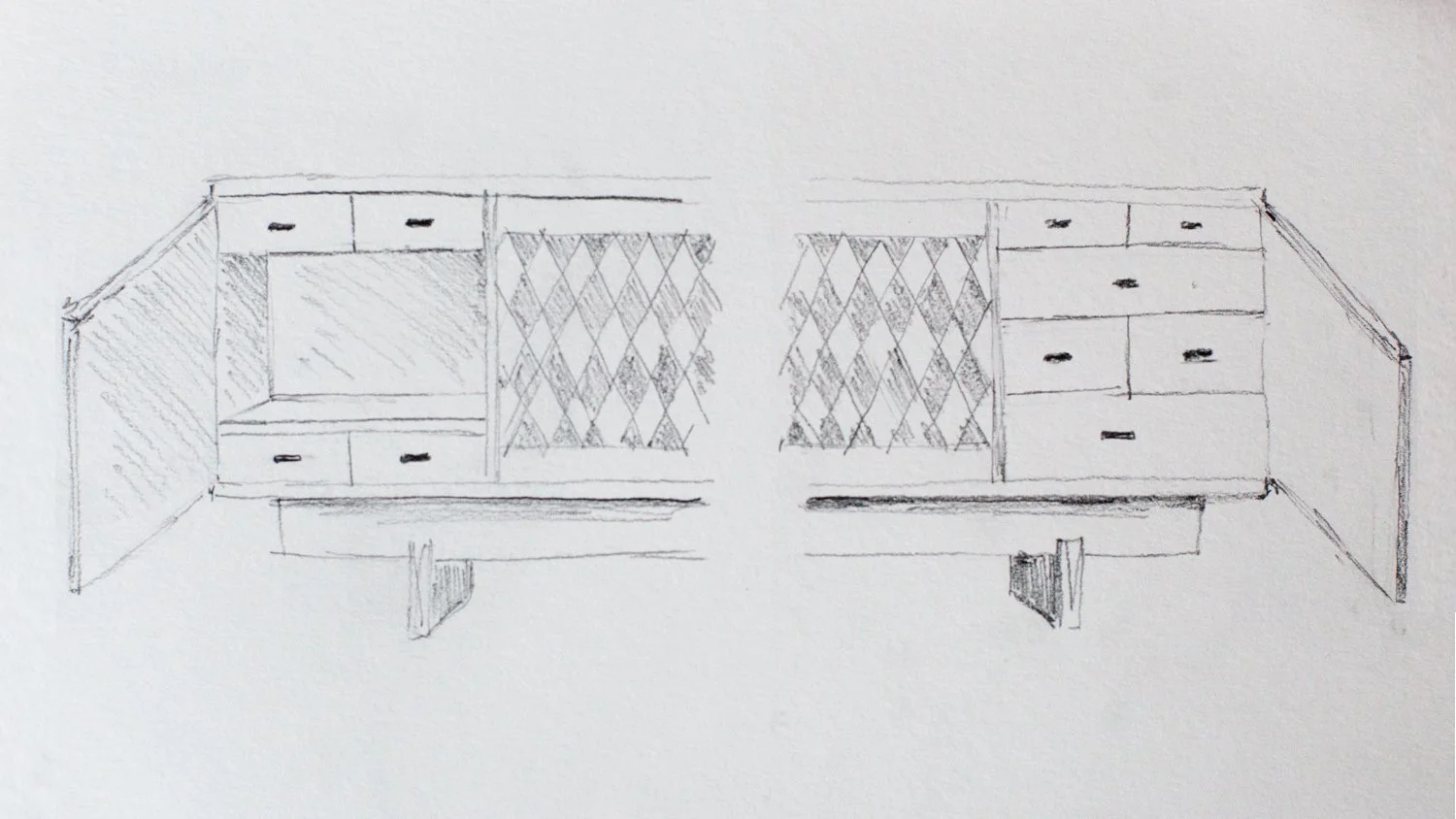
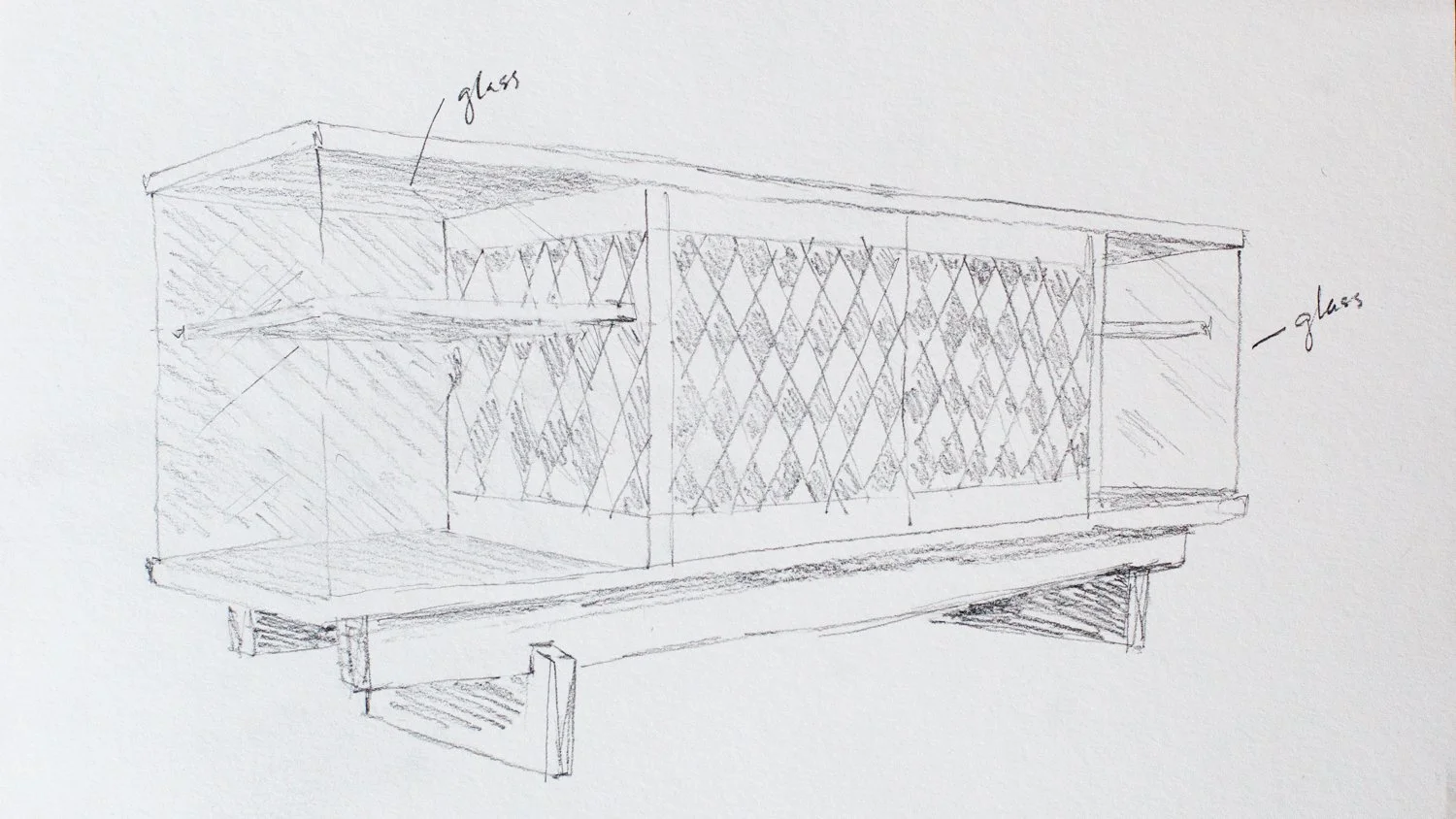
The credenza is conceived as a prototype within a broader unfolding of related works. The structural and formal logic remains consistent, while variation occurs through different ensembles of wood, the welcoming of broader materials like glass or ceramic or stone, a myriad of internal configurations, and relationships of purpose and provenance.
Hinged elements may slide, solid partitions may become glazed, and interior organizations may shift without altering the primary form. The intention is not to finalize a definitive expression, but to establish a repeatable framework capable of responding to inspiration and context.
Authored works in wood, well fitted together